Fiber Staple Length, Low-Twist Spinning, and Surface Friction Physics
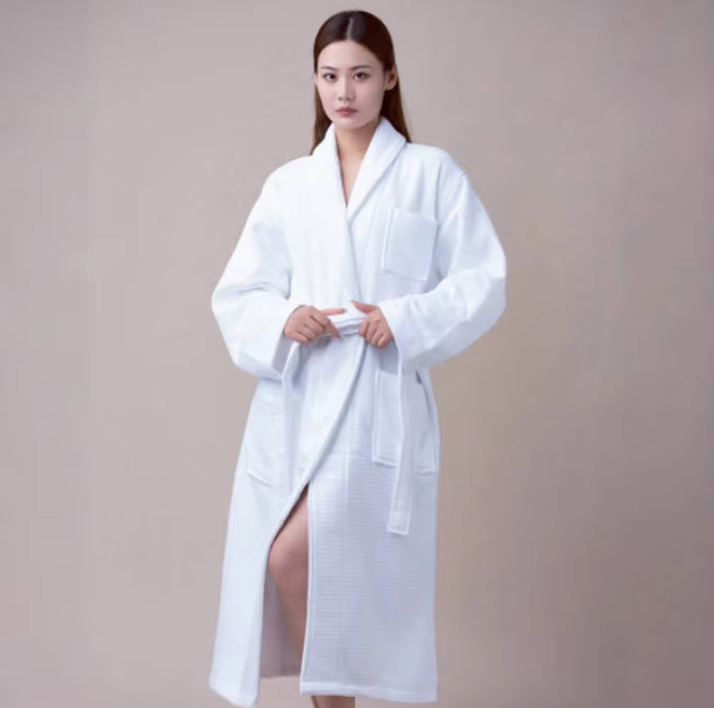
Stepping out of a steaming shower renders human skin up to thirty percent more permeable and vulnerable to mechanical abrasion than when dry. Wrapping warm, open pores in a rough garment woven from short, broken cotton fibers immediately triggers micro-scratching and contact redness. Selecting a genuinely luxurious soft bathrobe starts with examining yarn geometry before the fabric ever hits the cutting table. Standard carded cotton contains uneven staple lengths where thousands of tiny fiber ends poke outward from the yarn core, feeling crisp or scratchy after just three wash cycles. Combed long-staple cotton and zero-twist or low-twist ring-spun yarns solve this tactile harshness by aligning only the longest, smoothest cellulose fibers in parallel. Because low-twist yarns leave microscopic air pockets between the filaments, the terry loops compress like miniature cushions against the collarbones and shoulders. Equally impressive is the double-layer hybrid weave: pairing a sheared microfiber velour outer shell with an absorbent combed-cotton terry inner lining gives the wearer a buttery-smooth exterior hand-feel while keeping natural hydrophilic loops directly against wet skin.
Controlling Fabric pH Balance, Optical Brighteners, and Seam Construction
True skin friendliness involves far more than mechanical plushness; chemical residues left behind during bleaching, dyeing, and finishing often dictate whether sensitive users experience post-shower itching. Evaluating textile safety across retail households, boutique hotels, and thermal spa resorts relies on verifying three production standards:
Neutral-to-slightly-acidic fabric pH under AATCC Test Method 81 benchmarks: Healthy human skin maintains an acid mantle between pH 4.5 and 5.5, yet commercial bleaching baths use caustic alkalis; thorough acid-neutralization rinsing ensures the finished textile tests between pH 6.0 and 7.5 so residual alkali never strips natural skin lipids.
OEKO-TEX Standard 100 certification against formaldehyde and azo dyes: Strict chemical screening confirms that whitening agents, heavy metals, andallergenic disperse dyes are completely absent from the shawl collar and cuffs that rub constantly against the neck and wrists.
Covered French interior seams and tagless neck transfers: Even the plushiest fabric irritates damp shoulders if stiff nylon serger threads or scratchy woven polyester neck labels scrape the spine; binding internal armholes with soft cotton tape eliminates hidden friction points.
Tactile and Functional Comparison Across Bathrobe Weave Architectures
Matching fabric architecture and gram weight to ambient room temperatures prevents both post-bath shivering and uncomfortable sweating.
| Bathrobe Fabric Architecture | Typical GSM Weight | Primary Tactile Sensation | Moisture Absorption & Drying | Optimal Home, Hotel, or Spa Scenario |
|---|---|---|---|---|
| Combed Cotton Velour-Terry Hybrid | 380 to 450 GSM | Velvety sheared outside, absorbent loop inside | High water uptake, moderate drying time | Five-star hotel suites, luxury master bathrooms |
| 3D Honeycomb Waffle Weave Cotton | 260 to 340 GSM | Crisp, breathable, lightweight dimpled grid | Rapid wicking, ultra-fast ambient drying | Humid summer climates, poolside cabanas, day spas |
| Zero-Twist Combed Ring-Spun Terry | 420 to 500 GSM | Cloud-like lofty loops, thick thermal wrap | Maximum post-shower water absorption | Cold winter mornings, alpine ski lodges, home lounging |
| Coral Fleece / Micro-Plush Polyester | 280 to 350 GSM | Silky, feather-light, instant dry warmth | Low liquid uptake (best over dry pajamas) | Bedroom evening wear, cozy winter reading blankets |
The textile comparison above highlights a frequent buyer misconception: confusing dry bedroom loungewear robes with post-shower absorbent robes. While high-pile coral fleece feels remarkably silky against dry arms while reading in bed, putting non-absorbent hydrophobic fleece directly over dripping-wet skin traps clammy moisture; damp bodies require cotton terry, bamboo viscose, or dual-layer velour constructions first.
Field Lessons from a Colorado Alpine Spa Resort Linen Upgrade
Ignoring water hardness compatibility and alkaline wash residues can turn expensive hospitality robes into stiff cardboard within months. During a winter guest-experience audit at a boutique hot-springs and ski resort in Aspen, Colorado, the housekeeping director investigated why guests frequently complained about scratchy shawl collars and mild neck irritation after using the thermal mineral pools. The resort had recently purchased heavy 520 GSM open-end spun cotton robes from a general catalog supplier. Laboratory testing on robes pulled from guest closets revealed two root causes. First, the short-staple open-end yarn had stiffened dramatically under repeated high-temperature laundering, causing the thick shawl collar to chafe sunburned or wind-chapped faces. Second, inadequate rinse extraction left the fabric with an alkaline pH of 8.6, which reacted poorly with skin already sensitized by hot mineral water. Transitioning the resort inventory through an experienced textile manufacturer resolved both complaints. The replacement robes utilized a 400 GSM combed long-staple cotton terry interior paired with a brushed microfiber velour exterior, pre-washed with bio-polishing cellulase enzymes to remove stray surface fuzz and neutralized to a skin-safe pH of 6.5. Guest comfort ratings climbed immediately, and laundry drying cycles shortened by twenty percent.
Laundering Maintenance Limits and Sourcing Cohesive Home Textiles
Even the finest long-staple cotton or bamboo-blend bathrobe requires thoughtful laundry care to preserve its cloud-like loft. Pouring liquid fabric softener into every wash cycle coats hydrophilic cellulose loops in a waxy tallow layer that flattens the pile and blocks water absorption. Tumble drying on low-to-medium heat with wool dryer balls fluffs the loops mechanically without chemical buildup, while a splash of white vinegar in the rinse compartment removes hard-water calcium deposits naturally.
For hospitality procurement teams, spa operators, retail brands, and household buyers seeking eco-friendly, dermatologically gentle textiles across bathroom and bedroom spaces, Jianhong operates from Shenzhen under the core philosophy of quality as the foundation and customers at the center. With a coordinated product portfolio spanning plush bathrobes, towels, bath mats, slippers, pillows, bedding sets, summer quilts, and blankets, the team delivers contemporary, skin-friendly home lifestyle solutions tailored to global comfort standards.
Table of Contents
- Fiber Staple Length, Low-Twist Spinning, and Surface Friction Physics
- Controlling Fabric pH Balance, Optical Brighteners, and Seam Construction
- Tactile and Functional Comparison Across Bathrobe Weave Architectures
- Field Lessons from a Colorado Alpine Spa Resort Linen Upgrade
- Laundering Maintenance Limits and Sourcing Cohesive Home Textiles