As the global tourism market continues its steady recovery, the hospitality industry is entering a new phase of expansion and renovation. Hotels across major regions are accelerating property upgrades and new project developments, which in turn is driving a significant increase in demand for hotel linens. As one of the most essential operational consumables in the hospitality sector, hotel linen procurement is undergoing a comprehensive upgrade in both demand volume and quality standards.
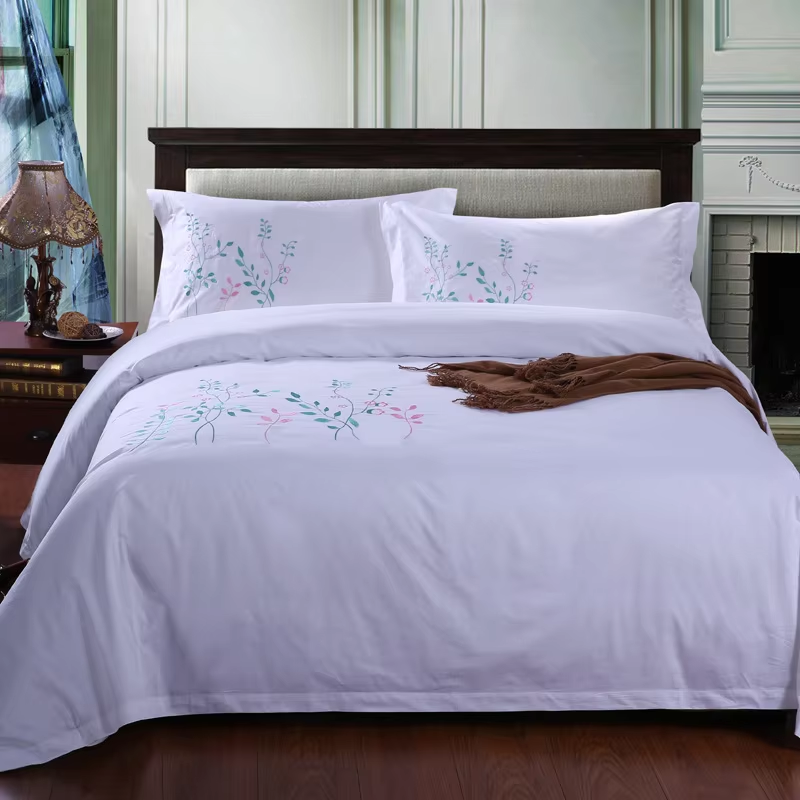

According to the latest data released by the United Nations World Tourism Organization (UNWTO), international tourist arrivals worldwide reached 118% of pre-pandemic levels in 2025. Key travel destinations across Europe, North America, and Southeast Asia have reported consistently rising hotel occupancy rates. This surge in demand has directly contributed to a year-over-year increase of more than 35% in cross-border procurement of core hotel linen products, particularly hotel bedding sets. Benefiting from a fully integrated industrial supply chain, China has become a primary sourcing destination for global hotel buyers.
In hotel operations, bedding sets play a critical role in shaping the overall guest experience. They are not only essential for ensuring sleep quality but also serve as a key element in conveying a hotel’s brand identity. Unlike household bedding, hotel bedding sets must meet far more rigorous standards. These products are required to withstand frequent industrial washing and high-temperature sterilization while maintaining durability, softness, and skin-friendly properties. Achieving the balance between long-lasting performance and guest comfort has become a defining requirement in modern hotel bedding design.
At present, three major trends are influencing the global hotel procurement landscape. First, luxury and upscale hotels are increasingly focused on customized and differentiated bedding solutions. By incorporating unique designs, premium materials, and brand-specific elements, these hotels aim to create a distinctive sleep experience that enhances brand recognition and guest loyalty. Second, mid-scale and chain hotels are prioritizing standardized, cost-effective bulk procurement. Their goal is to streamline operations and reduce costs while maintaining consistent quality across multiple properties. Third, the entire industry is accelerating its transition toward sustainability. Eco-friendly bedding products made from organic cotton, recycled fibers, and biodegradable materials are becoming new procurement priorities as hotels align with global environmental standards and corporate social responsibility goals.


China’s hotel bedding industry has undergone decades of development and has built a highly efficient and comprehensive industrial ecosystem. From fabric weaving and dyeing to finishing and final product manufacturing, the supply chain is fully integrated. Major industrial clusters, such as Nantong in Jiangsu Province and Binzhou in Shandong Province, host tens of thousands of specialized manufacturers. These clusters are capable of handling large-scale, multi-category orders from international clients, ensuring both production efficiency and product consistency.
Compared with international suppliers, Chinese manufacturers offer several distinct advantages. First is cost competitiveness. For bedding sets of equivalent quality, products sourced from China are typically priced 30% to 50% lower than those produced in Europe or North America, allowing hotels to significantly reduce procurement costs. Second is supply chain agility. Chinese manufacturers are highly responsive and capable of quickly delivering customized designs, samples, and large-volume production. Lead times can be reduced by more than 40% compared to many international competitors. Third is a well-established quality assurance system. Many leading Chinese manufacturers have obtained internationally recognized certifications such as OEKO-TEX® Standard 100 and ISO 9001, ensuring compliance with global safety, environmental, and quality standards. This enables their products to meet regulatory requirements across different regions and markets.
In the cross-border export market, Chinese hotel bedding sets serve a diverse range of clients, including global hotel chains, regional hospitality brands, and professional procurement service providers. Major international hotel groups such as Marriott, Hilton, and InterContinental typically adopt centralized procurement and tendering systems for their global operations. Chinese suppliers, with their consistent quality, flexible customization capabilities, and competitive pricing, have become key partners in these supply networks. At the same time, emerging tourism markets in Southeast Asia and the Middle East are experiencing rapid growth, and local hotel brands in these regions are increasingly turning to Chinese suppliers as their preferred sourcing option. This trend is further expanding China’s share in the global hotel linen market.
For foreign trade enterprises, capturing the opportunities brought by the recovery of the hotel industry requires a strategic approach. Companies must accurately align their offerings with evolving procurement demands and continuously optimize both products and services. On the product side, developing a diversified portfolio is essential. For luxury hotels, businesses should offer high-end, customized bedding sets made from premium materials and incorporating brand-specific design elements. For chain hotels, standardized, cost-effective solutions that support large-scale procurement are key. Additionally, eco-friendly product lines featuring organic cotton and biodegradable materials should be developed to meet growing sustainability requirements.
On the service side, strengthening cross-border capabilities is equally important. Providing end-to-end solutions—including product design, manufacturing, logistics, and after-sales support—can effectively address the challenges faced by international buyers. By offering a seamless procurement experience, companies can enhance customer satisfaction and build long-term partnerships.
Looking ahead, the global hotel industry’s recovery is expected to continue, and demand for hotel bedding sets in cross-border procurement will maintain steady long-term growth. China’s role in the global supply chain is also evolving—from a traditional manufacturing and export base to a hub for brand development and international expansion. Increasingly, Chinese companies are leveraging cross-border e-commerce platforms such as Alibaba International and Xiaoman to connect directly with global buyers, build proprietary brands, and enhance product value.
As the hospitality industry continues to raise its expectations for product quality, sustainability, and innovation, China’s hotel bedding sector is poised to enter a new phase of growth. With its strong supply chain capabilities and ongoing transformation, it is set to become an indispensable pillar in the global hotel supply ecosystem.

Shenzhen Jianhong Industrial Co., Ltd provides premium hotel linens, towels & bedding for global hospitality brands. Our 100% cotton, OEKO-TEX®-certified, customizable solutions deliver luxury, durability & fast turnaround. Trusted by 700+ hotels. Request samples today.
Room 705, Guohuitong Building, No. 341 Xixiang Avenue, Laodong Community, Xixiang Subdistrict, Bao'an District, Shenzhen
Copyright © 2025 by Shenzhen Jianhong Industrial Co., Ltd. Privacy Policy
 EN
EN