
 EN
EN
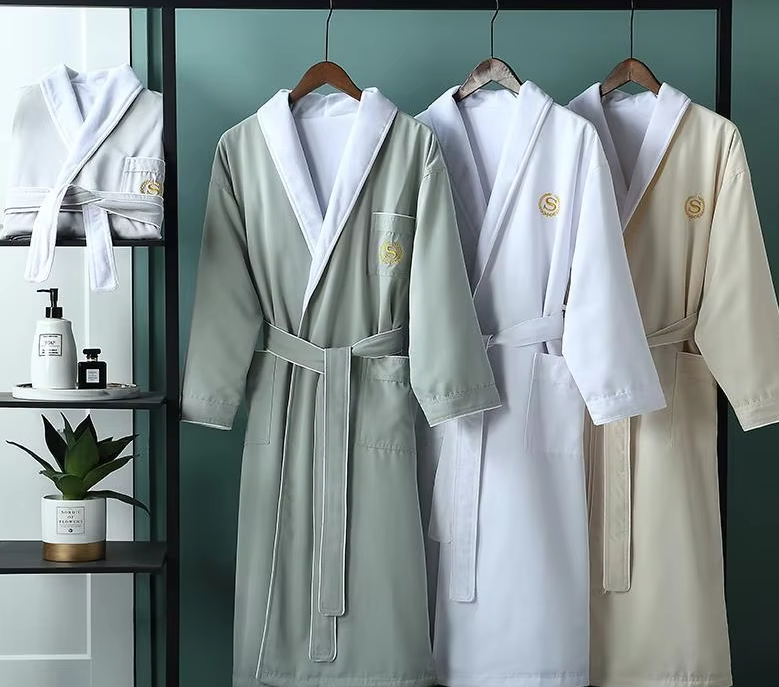
Why Cotton Feels Different Against the Skin
Cotton has a natural advantage that synthetic fibers struggle to copy. The fiber surface is soft and slightly irregular, which reduces friction against skin. A soft bathrobe made from long-staple cotton feels smooth without the slick, plastic-like touch of polyester. That difference matters after a shower, when skin is warm and sensitive. Global users often describe cotton robes as breathable and gentle, especially for daily use. According to the International Cotton Advisory Committee, cotton accounts for roughly 24 percent of global fiber consumption, and much of that demand comes from next-to-skin products. The fiber also absorbs moisture without feeling damp immediately, which is why hotels and spas keep specifying cotton for robes.
Breathability and Moisture Behavior That Synthetics Cannot Match
Breathability is not a marketing word. It is a measurable property linked to fiber structure. Cotton fibers have a hollow center and irregular surface, which allows air to move through the fabric. Polyester and nylon are smoother and denser, so heat and moisture can build up. A cotton robe wicks moisture away from the body and releases it into the air. The trade-off is drying time. Cotton takes longer to dry than synthetic fabrics, which matters in humid climates or high-turnover hotel settings. Blends can improve drying speed, but they often reduce the soft hand feel that users prefer. The table below compares common robe materials.
| Material | Moisture absorbency | Drying speed | Softness | Durability |
|---|---|---|---|---|
| Long-staple cotton | High | Moderate | Excellent | Good |
| Polyester | Low | Fast | Fair | Excellent |
| Cotton-poly blend | Medium | Moderate to fast | Good | Very good |
| Bamboo viscose | High | Moderate | Very soft | Fair |
| Microfiber | Low | Fast | Soft initially | Good |
Durability, Wash Performance, and Long-Term Value
Cotton robes can last for years if the fabric is properly finished. The weak point is shrinkage. A robe that fits well in the showroom may shorten after the first wash. Pre-shrunk cotton or garment-washed cotton reduces that risk. Stitching quality also matters. Double-stitched seams and reinforced belt loops extend service life. In one sourcing review at a hotel textile supplier in Shenzhen, a batch of cotton bathrobes showed 6 to 8 percent shrinkage after three washes. The fabric had not been pre-shrunk, and the dryer temperature in the hotel laundry was higher than the supplier assumed. The fix was a pre-shrunk specification and a wash care label with a lower dryer setting. This kind of issue is common when buyers focus on unit price and ignore finishing details.
Global Preferences: Climate, Culture, and Hotel Standards
Preferences vary by region. North American buyers often choose heavier terry cotton robes for warmth and absorbency. European hotels tend to prefer lighter waffle weaves that dry faster and pack smaller. Middle East and Southeast Asia markets often favor longer robes with breathable cotton for hot climates. Spa resorts frequently request white cotton robes with a soft hand feel and a clean, minimal look. These differences affect weight, weave, and packaging. A robe that sells well in Norway may feel too heavy in Dubai. Global users do not share one preference. They share a common expectation: the robe should feel comfortable against skin and hold up after repeated laundering.
Sustainability and Certification Pressure from Buyers
Cotton has a sustainability story, but it is not automatic. Conventional cotton uses significant water and pesticides. Organic cotton and recycled cotton reduce that impact. Buyers increasingly ask for OEKO-TEX Standard 100 or GOTS certification. OEKO-TEX Standard 100 limits harmful substances, which matters for products that touch skin. GOTS covers organic content and processing. These certifications add cost, but they open doors in Europe, North America, and Japan. A cotton robe without traceable fiber or tested dyes may face rejections at retail. The honest limitation is that certification does not solve water use. It documents a process. Buyers who care about sustainability should look at the full supply chain, not just a logo.
What to Check Before Sourcing a Cotton Soft Bathrobe
Sourcing a soft bathrobe is not just about picking a color and weight. Several checks prevent problems later.
Confirm fiber length and origin, because long-staple cotton feels softer and pills less.
Ask for shrinkage data after multiple washes, not just one.
Check seam construction, belt loops, and pocket attachment.
Review certification documents for OEKO-TEX or GOTS if the market requires them.
Test the actual hand feel after washing, since finishes can wash out.
A supplier with in-house testing and stable fabric sourcing reduces surprises. JH Super works across bathroom and bedroom textiles, including bathrobes, towels, and bedding. Its base in Shenzhen provides access to export logistics and a mature textile supply chain. For buyers who need consistent hand feel and documented materials, that combination matters more than a low quote.
Table of Contents
- Why Cotton Feels Different Against the Skin
- Breathability and Moisture Behavior That Synthetics Cannot Match
- Durability, Wash Performance, and Long-Term Value
- Global Preferences: Climate, Culture, and Hotel Standards
- Sustainability and Certification Pressure from Buyers
- What to Check Before Sourcing a Cotton Soft Bathrobe