 EN
EN
The Detail That Guests Notice Without Realizing It
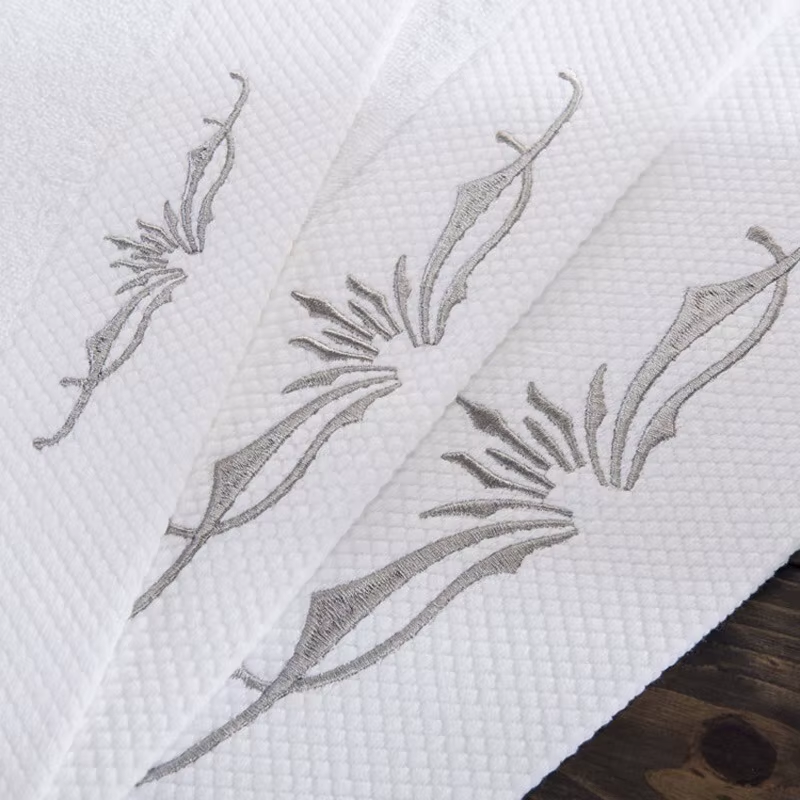
Walk into any premium hotel bathroom and there it is — a subtle, stitched emblem on the corner of a bath towel, or perhaps a discreet monogram on the hem of a robe. Most guests won't consciously register it, but the message lands nonetheless. That small piece of thread work signals that the property cares about the details, down to the most everyday items. The same logic applies to home textiles, where personalized embroidery has moved well beyond the monogrammed handkerchief of decades past.
The hospitality industry has taken particular notice. A 2025 industry report noted that more hoteliers are opting for intricate embroidery and bespoke labels to cement their branding. And it's not just five-star properties — boutique hotels, serviced apartments, and even high-end Airbnb hosts are adopting the practice. The global embroidery market, valued at approximately USD 1.59 billion in 2025, continues to expand across hospitality textiles and home décor.
So what's driving this shift? The answer lies at the intersection of durability, guest psychology, and a subtle shift in what consumers now expect from the textiles they touch every day.
Why Embroidery Outlasts Every Other Branding Method
There are several ways to put a logo on a towel. Screen printing, heat transfer, woven labels — each has its place. But for items that go through industrial laundering, most of these methods fall short.
Embroidery integrates directly into the fabric structure. The thread becomes part of the towel itself, not a layer sitting on top. This matters because hotel towels don't get treated gently. They face high-temperature washes, chlorine-based sanitizers, aggressive spin cycles, and tumble drying — day after day. A printed logo might look sharp on day one, but after fifty wash cycles? The cracks start showing. Colors fade, edges peel, and what once looked premium starts looking worn.
Embroidery takes a different path. Quality threads are colorfast and engineered to survive commercial laundering without bleeding or degrading. The stitch density, when properly matched to the fabric weight, holds detailed logos cleanly through daily commercial washing. A well-executed embroidered logo doesn't just last as long as the towel — it lasts exactly as long, because it's built into the same material and subjected to the same conditions.
One hotel procurement director shared a telling observation during a linen audit at a coastal resort property. The team compared towels from two different suppliers — one with screen-printed logos, another with embroidery — after twelve months of daily poolside use. The printed logos were barely legible. The embroidered ones? Still crisp. That single finding shifted the property's entire approach to branded textiles.
The Tactile Factor That Print Cannot Replicate
There's something about embroidery that goes beyond visibility. Run a finger over an embroidered logo and the raised texture is immediately apparent — a subtle three-dimensional quality that printed ink simply cannot deliver. That tactile element communicates quality in a way that visual cues alone cannot match.
For hotels, this matters more than many operators realize. Guests interact with towels in a relatively intimate way — they're touching their face, drying their hands, wrapping themselves after a shower. The sensory experience of the textile shapes their overall perception of the property. A flat, printed logo feels like an afterthought. Embroidery feels intentional, considered, premium.
This is particularly relevant for home textiles as well. Consumers increasingly seek out items that feel crafted rather than mass-produced. An embroidered detail on a bath towel or a set of bedding creates a sense of personalization that resonates emotionally — it signals that someone took the time to add a finishing touch. And in an era where so many products feel identical, that small distinction can be the difference between a one-time purchase and repeat business.
Where the Numbers Actually Land
The cost question inevitably comes up. Embroidery costs more upfront than printing — that's not in dispute. But commercial buyers who look only at the initial price per unit are missing the bigger picture.
| Factor | Screen Printing | Embroidery |
|---|---|---|
| Longevity under commercial laundering | Fades within 50–100 cycles | Maintains integrity for lifespan of towel |
| Tactile quality | Flat, no texture | Raised, premium feel |
| Brand perception | Perceived as budget | Perceived as premium |
| Cost per use over towel lifespan | Higher (needs replacement sooner) | Lower (lasts full lifespan) |
The math changes when you calculate cost per use rather than cost per unit. A towel that lasts twice as long often delivers far greater long-term value. For a hotel replacing hundreds of towels annually, that difference adds up quickly. And there's an additional factor: guests are less likely to walk off with a clearly branded towel. The visible logo serves as a subtle deterrent — not a guarantee, but a meaningful reduction in inventory loss.
The Brand Consistency Angle
Consistency matters in hospitality. A guest who stays at one property and then another under the same brand expects a certain level of quality and attention to detail. Embroidered logos help maintain that visual identity across every piece of inventory.
But it goes deeper than just slapping a logo on everything. The placement, size, and color of the embroidery all communicate something about the brand. Tone-on-tone embroidery — where the thread matches the fabric — offers a more understated, refined look. Contrast stitching makes the logo pop. Some luxury properties opt for three-dimensional padded embroidery to give the logo visual weight and presence.
The choice of technique matters as much as the decision to embroider at all. For simple logos with clean lines, flat embroidery produces excellent results at a controlled cost. For more intricate designs, higher stitch counts and specialized thread types may be necessary. The key is matching the technique to the design and the intended use case.
When Embroidery Doesn't Make Sense
Honest advice requires acknowledging the limitations. Embroidery isn't always the right answer.
For lightweight, quick-dry towels used in high-turnover environments like gyms or pool decks, the added weight and slight stiffening of the embroidered area might be a drawback. For towels that are replaced frequently due to heavy wear, the upfront cost of embroidery may not justify itself. And for extremely delicate fabrics, the stitching process can create stress points that compromise the material.
The sweet spot is in applications where the towel is expected to have a reasonable lifespan and where brand presentation matters — hotels, resorts, spas, and premium home textiles. For disposable or short-lifecycle products, other methods make more sense.
A Final Note on Execution
The quality of the embroidery depends on several variables: thread quality, stitch density, fabric weight, and the skill of the embroidery operator. A budget towel with poor embroidery will look worse than a quality towel with no embroidery at all. The fabric needs to be substantial enough to hold the stitches cleanly. The thread needs to be colorfast and resistant to bleaching agents. The design needs to be digitized properly to translate from screen to fabric.
Properties that get this right work with suppliers who understand these technical requirements. HXJ, for example, has built a reputation for consistent execution across bulk orders — ensuring that every piece in a shipment meets the same standard, whether it's a bath towel for a five-star property or a set of home textiles for a retail partner. That kind of manufacturing discipline is what separates reliable suppliers from the rest.