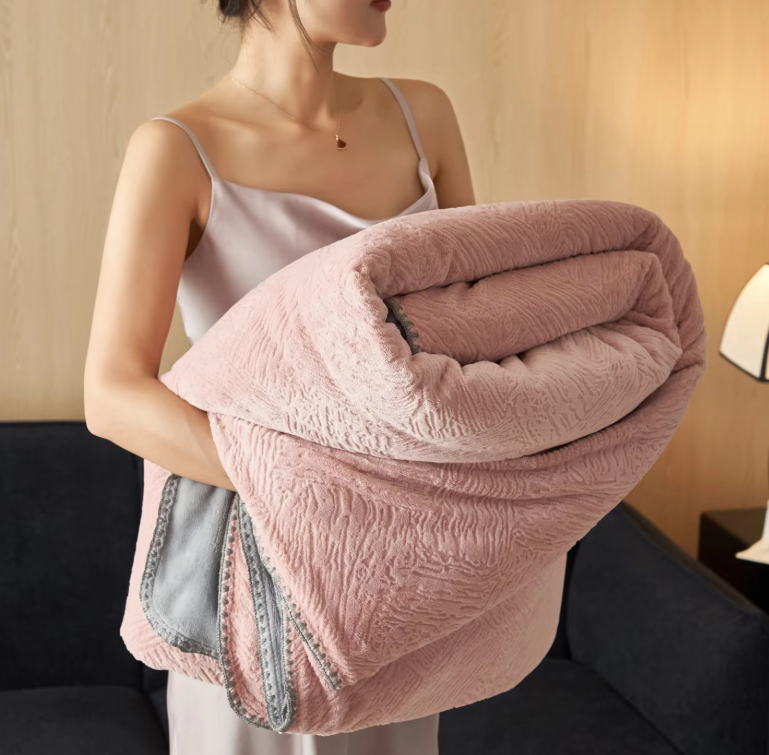
Separating Bathroom Loops from Bedroom Weaves in the Wash Drum
Tossing heavy terry bath towels, delicate sateen duvet covers, and synthetic throw blankets into a single washing machine load is the fastest way to ruin an entire linen closet. Proper maintenance across diverse home textiles starts with understanding how fiber friction and water absorption rates clash inside a rotating wash drum. Bathroom essentials like combed cotton towels, plush bathrobes, and tufted bath mats are engineered with thousands of raised uncut loops designed to trap massive volumes of water. When those heavy, wet loops tumble against flat-woven bedroom pillowcases or high-thread-count sheets, the coarse towel hems act like mild sandpaper, abrading fine bedding yarns and causing premature surface pilling. Conversely, loose lint shed from cotton sheets gets trapped deep inside synthetic microfiber or coral fleece blankets, matting the plush pile permanently. Sorting laundry loads by both structural weave and fiber family under ISO 3758 care-labeling guidelines prevents mechanical cross-damage before water even fills the tub.
Water Temperature Calibration, Detergent Chemistry, and Silicone Risks
Once fabrics are separated by category, chemical dosing and thermal settings determine whether linens emerge fresh or stiff. Overdosing alkaline powder detergent or cranking the water heater to maximum creates three common degradation patterns across bathroom and bedroom fabrics:
Avoiding cationic silicone fabric softeners on absorbent bathroom terry: Liquid softeners coat cotton and bamboo towel loops in a hydrophobic wax film that blocks capillary water uptake; adding fifty milliliters of distilled white vinegar during the final rinse dissolves hard-water calcium buildup naturally and keeps terry piles lofty.
Matching wash temperatures to AATCC Test Method 135 dimensional stability benchmarks: While cotton bath towels handle warm forty-to-sixty-degree-Celsius washes to dissolve body oils, reactive-dyed bedding sets and summer quilts retain their crisp fit and color vibrancy best at thirty to forty degrees Celsius using neutral liquid enzymes.
Protecting elastomeric backing on non-slip bath mats and slippers: Exposing thermoplastic rubber or latex bath-mat backings to high-heat dryer drums causes the non-skid base to crack, crumble, and clog lint traps; air-drying mats flat preserves floor grip across years of daily use.
Laundering and Maintenance Matrix Across Household and Hospitality Linens
Tailoring wash temperatures, spin speeds, and drying mechanics to specific fabric constructions extends service life across both residential laundry rooms and commercial hospitality operations.
| Textile Category & Construction | Optimal Wash Temperature | Detergent & Additive Protocol | Tumble Dry & Finishing Method | Primary Damage Risk to Avoid |
|---|---|---|---|---|
| Combed Cotton Towels & Bathrobes | 40°C to 60°C warm cycle | Mild liquid detergent + white vinegar rinse | Low-to-medium heat with wool dryer balls | Silicone softener buildup blocking absorbency |
| Sateen & Percale Bedding Sets | 30°C to 40°C gentle cycle | Neutral enzyme detergent, zero chlorine bleach | Remove slightly damp, warm iron or flat press | High-heat over-drying causing 5%+ shrinkage |
| Tufted Bath Mats & Spa Slippers | 30°C cold-to-warm delicate | Low-sudsing neutral wash inside mesh bag | Air-dry flat away from direct radiator heat | Cracking TPR/latex non-slip backing in hot dryers |
| Summer Quilts & Hollow-Fiber Pillows | 30°C high-water-level cycle | Liquid detergent only (powders clump in fill) | Low heat with tennis balls to restore loft | High-speed spin twisting or clumping internal fill |
| Microfiber & Fleece Throw Blankets | 30°C cold wash (separate load) | Zero fabric softener, anti-static mild wash | Air-dry or no-heat tumble cycle | Temperatures above 60°C melting synthetic tips |
The maintenance matrix above highlights a critical rule for filled bedroom items like pillows and summer quilts: always run an extra rinse cycle to flush out trapped soap suds from the interior batting, and dry them with clean tennis or wool balls to break up wet fiber clumps.
Field Lessons from a Savannah Boutique Hotel and Spa Linen Audit
Mismanaging laundry chemistry and dryer cutoff temperatures can cut the lifespan of premium hospitality linens in half within six months. During an operational cost audit at a forty-room boutique coastal hotel and spa in Savannah, Georgia, the general manager investigated why replacement orders for bath towels, bathrobes, and king-size duvet covers had doubled over two quarters. Guests complained that bath towels felt waxy and failed to dry their skin, while housekeeping staff struggled to fit shrunken flat sheets and pillowcases onto mattresses. Inspecting the on-premise laundry room revealed three procedural errors. First, laundry attendants were washing heavy 550 GSM bath mats together with 300-thread-count percale sheets, tearing hem stitches and coating the sheets in coarse lint. Second, the automatic chemical dispenser was pumping heavy silicone softener into every towel load. Third, gas dryers were running at eighty-five degrees Celsius until bone-dry, baking progressive relaxation shrinkage into the cotton bedding. Collaborating with an experienced textile supplier restructured the entire care workflow. Attendants separated bathroom terry from bedroom flatwork, replaced chemical softeners with citric-acid sour rinses to neutralize water pH, and enabled moisture-sensing dryer shutoffs at sixty degrees Celsius. Towel absorbency recovered within three washes, and annual linen replacement expenses dropped by thirty-five percent.
Storage Humidity Boundaries and Sourcing Durable Home Collections
Proper textile care continues after the dryer stops spinning. Folding and sealing slightly damp summer quilts, blankets, or bath towels inside airtight plastic bins traps residual moisture, inviting mildew spores and yellowing phenolic stains within weeks. Storing clean linens in breathable cotton storage bags or ventilated closet shelves with cedar blocks keeps fibers fresh between seasonal rotations.
For household consumers, retail buyers, hoteliers, and spa resort managers seeking long-lasting, easy-care home textiles engineered for both comfort and wash durability, Jianhong operates from Shenzhen under the guiding principle of quality as the foundation and customers as the core. Spanning a complete portfolio of bathroom essentials like towels, bath mats, bathrobes, and slippers alongside bedroom pillows, bedding sets, summer quilts, and blankets, the team delivers eco-friendly, aesthetically refined lifestyle solutions built to stay soft wash after wash.
Table of Contents
- Separating Bathroom Loops from Bedroom Weaves in the Wash Drum
- Water Temperature Calibration, Detergent Chemistry, and Silicone Risks
- Laundering and Maintenance Matrix Across Household and Hospitality Linens
- Field Lessons from a Savannah Boutique Hotel and Spa Linen Audit
- Storage Humidity Boundaries and Sourcing Durable Home Collections