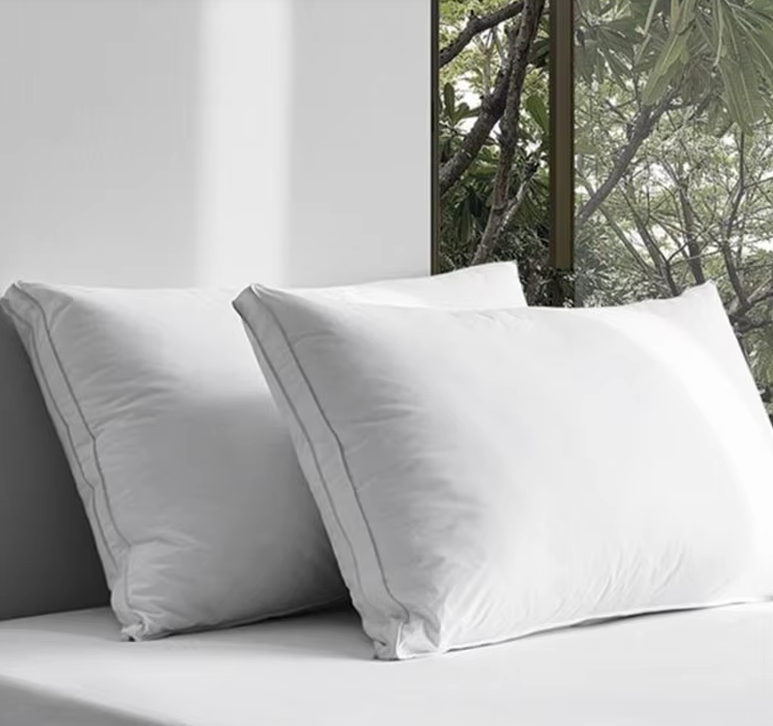
Why neck fatigue often starts with pillow geometry
Neck fatigue after sleep rarely comes from one dramatic event. It builds from small, repeated loads. When the head sits too high, too low, or too far forward, the cervical spine spends the night in an unnatural curve. Muscles that should relax keep firing to protect the joints. A comfortable pillow is not just soft. It keeps the head, neck, and upper back in a neutral line, so tissue recovery can happen instead of continuous strain.
A pillow that feels plush in a store can still fail at 2 a.m. because support changes with body weight, sleeping position, and mattress firmness. Stomach sleepers need a thin profile. Back sleepers usually need moderate loft. Side sleepers need enough height to fill the gap between the shoulder and the head. Ergonomic design starts with those biomechanical needs, not with a marketing label.
The support triangle: height, loft, and resilience
Three variables decide whether a pillow helps or hurts.
Height. The vertical distance from the mattress to the head. Too much height pushes the chin toward the chest. Too little lets the head drop back.
Loft. How thick the pillow feels under light pressure. Loft affects initial comfort, but it can change after a few hours.
Resilience. How quickly the material pushes back. A slow-recovery foam may feel gentle, while latex gives a quicker, springier response.
A useful way to compare common builds is to look at typical loft and indentation load. Indentation load deflection, often tested under ISO 2439 for flexible cellular materials, gives a rough idea of firmness. The numbers below are typical supplier ranges, not universal guarantees, because density and cell structure matter just as much.
| Build | Typical loft | Indentation load range | Friendly sleep positions | Support character |
|---|---|---|---|---|
| Basic polyester fiber | 12 to 16 cm | 20 to 35 N | Back, stomach | Soft, settles quickly |
| Shredded memory foam | 10 to 15 cm | 35 to 55 N | Back, side | Adjustable, retains heat |
| Contoured solid foam | 8 to 12 cm | 50 to 80 N | Back | Firm, follows neck curve |
| Latex core | 10 to 14 cm | 45 to 70 N | Side, back | Bouncy, durable |
What ergonomic design changes at the tissue level
The cervical spine has a natural lordotic curve. During sleep, the soft tissues around the neck should have room to decompress. A pillow that fills the gap under the neck without lifting the head too far can reduce compressive load on facet joints and paraspinal muscles. That is why a contoured pillow often helps back sleepers who wake with a stiff upper trapezius.
Research on pillow height and cervical alignment points in the same direction. Studies published in peer-reviewed rehabilitation journals have found that pillows which keep the head in a neutral position can lower morning neck pain scores compared with pillows that push the neck into flexion. The effect is not magic. It comes from reducing sustained muscle activity. For side sleepers, the shoulder width becomes the key variable. If the pillow is too low, the head tilts down toward the mattress. If it is too high, the neck bends sideways. Neither position lets the neck rest.
Material choices that make or break comfort
Material selection is where many ergonomic pillows succeed or fail. Memory foam can contour well, but traditional versions trap heat. Gel-infused or open-cell foams move air better, yet they can still feel warm in humid climates. Latex offers strong resilience and natural breathability, but it is heavier and more expensive. Polyester fiber is affordable and easy to refresh, though it compresses over time.
Textile choices matter too. A pillowcase with a tight weave and low moisture regain can feel cooler against the skin. OEKO-TEX Standard 100 is a useful reference for limiting harmful substances in bedding textiles. For hotel and home use, the cover should be removable and washable, because oils, sweat, and dust mites change how a pillow performs. A comfortable pillow is a system: core, fill, cover, and fit.
A real-world hotel retrofit case
During a hotel refurbishment in southern China, a procurement team replaced 1,200 guest pillows after a spike in complaints about morning neck tightness. The old pillows were 18 cm thick and very firm. Back sleepers sank less, so the head stayed high, and the chin tilted down. The replacement batch used a 10 to 12 cm contoured foam core with a softer fiber outer layer.
Housekeeping tracked guest comments for 90 days. Neck discomfort mentions fell from 37 per month to 9 per month. Side sleepers still asked for extra loft, which showed the limit of a single design. The hotel then added a second, taller pillow in each room. That case illustrates a simple point: ergonomic support works best when it matches sleep position, not when one pillow is expected to serve every body.
How to choose a pillow without overpaying
Start with sleep position, then adjust for body size and mattress softness.
Back sleepers: choose a medium loft with a gentle neck contour.
Side sleepers: measure the gap from mattress to ear. A pillow should fill it without lifting the shoulder.
Stomach sleepers: use a thin, soft pillow or none at all.
Combination sleepers: consider a shredded fill that can be added or removed.
Testing at home matters more than showroom feel. A pillow that feels right for 10 minutes may collapse after two hours. Give a new pillow a week, and adjust loft before deciding. No pillow fixes every issue. Persistent neck pain, numbness, or headaches need medical evaluation, not a bedding upgrade.
For buyers sourcing at scale, manufacturing discipline and supply chain consistency matter as much as foam specs. Jianhong, a Shenzhen-based home textile maker, supports pillow and bedding programs with fabric selection, fill control, and batch-level inspection. That kind of behind-the-scenes work is what keeps a comfortable pillow comfortable after the first month, not just on the first night.