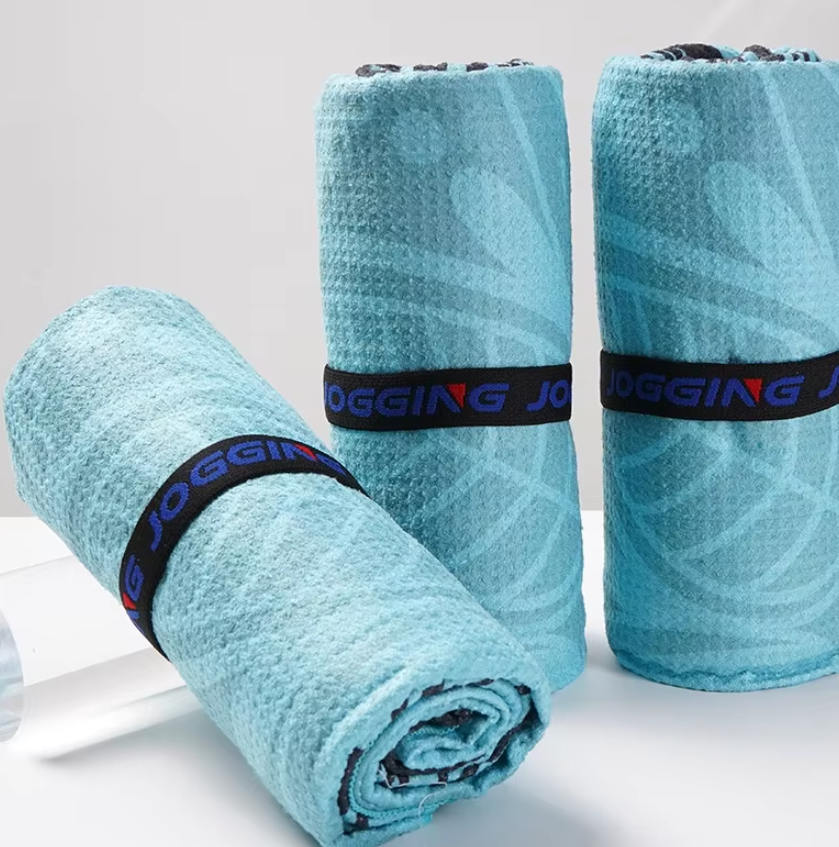
Capillary Wicking Physics in Split Microfiber Versus Combed Cotton
Wiping adrenched forehead mid-set with a cheap gym cloth that merely smears sweat from temple to chin is one of the most annoying distractions during heavy training. Selecting a genuinely functional sports towel starts with examining how textile fibers capture and hold liquid at the microscopic level. Natural long-staple combed cotton relies on hydrophilic cellulose cores that swell as moisture penetrates the yarn interior, offering a plush, comforting hand-feel against flushed skin. Split conjugated microfiber, typically blended in an eighty-percent polyester and twenty-percent polyamide ratio, works through an entirely different physical mechanism: capillary action. During chemical or mechanical splitting, each extruded synthetic filament divides into sixteen or thirty-two wedge-shaped micro-strands measuring less than zero point two denier. Those microscopic wedges create thousands of tiny channels per square inch that vacuum droplets off the skin surface instantly without absorbing water into the polymer core itself. Under AATCC Test Method 79 benchmarks for textile absorbency, a properly scoured cotton loop or split polyamide-blend weave absorbs a water droplet in under two seconds, whereas low-grade unsplit polyester simply repels moisture across the face.
Optimizing GSM Weight, Pile Loop Architecture, and Edge Stitching
Raw fiber chemistry only tells half the story; how the loom constructs the pile height and fabric density determines whether a workout cloth dries between sessions or turns into a heavy, sour-smelling rag inside a gym locker. Evaluating textile specifications for athletic, household, or hotel fitness facilities comes down to three structural variables:
Grams per square meter weight calibration: Heavy bath sheets rated above 600 GSM feel luxurious after a spa shower, yet trap far too much heat around an athlete's neck; keeping athletic towels between 280 and 420 GSM balances rapid sweat uptake with fast ambient evaporation.
Zero-twist terry loops versus waffle honeycomb weaves: Short, dense terry loops resist snagging on barbell knurling and Velcro weightlifting belts, while three-dimensional waffle pockets increase surface area for rapid airflow drying during outdoor tennis or road cycling.
Double-needle lockstitch hemming and reactive dyeing: Commercial laundering subjects gym linens to aggressive agitators and high-spin extraction; reinforced overlock edges prevent fraying, while OEKO-TEX Standard 100 certified reactive dyes stop dark pigments from bleeding onto damp workout shirts.
Performance Comparison Across Workout Textile Constructions
Matching weave geometry and fiber composition to specific training environments prevents both skin chafing and premature laundry wear.
| Textile Construction & Blend | Typical GSM Range | AATCC 79 Drop Absorption | Drying Speed & Packability | Ideal Workout & Facility Scenario |
|---|---|---|---|---|
| 100% Combed Ring-Spun Cotton Terry | 380 to 450 GSM | Under 2.0 seconds | Moderate drying, plush bulk | Commercial gym weight rooms, hotel fitness centers |
| 80/20 Split Microfiber Suede Weave | 220 to 300 GSM | Under 1.5 seconds | Ultra-fast drying, folds pocket-flat | Backpacking, outdoor trail running, crowded travel bags |
| 3D Waffle-Pique Microfiber or Cotton | 300 to 360 GSM | Under 1.8 seconds | High airflow, non-stick texture | Hot yoga studios, indoor cycling, high-humidity climates |
| Bamboo Viscose & Cotton Blend Terry | 400 to 480 GSM | Under 2.0 seconds | Slower drying, silky cool touch | Sensitive facial skin, boutique pilates and spa clubs |
The specification matrix above highlights a common procurement mistake: buying ultra-lightweight flat suede microfiber for members who prefer wiping their faces with a traditional loop texture. Because flat suede microfiber grips wet skin tightly, users must pat rather than drag the fabric across the forehead, whereas waffle-textured or short-loop cotton glides smoothly.
Field Lessons from a Miami Boutique Fitness and Spa Club Overhaul
Cutting corners on yarn splitting or silicone fabric softeners can ruin a facility's towel service reputation overnight. During a summer membership audit at a multi-location boutique indoor cycling and wellness club in Miami, Florida, operations managers investigated a surge in member complaints regarding the complimentary workout linens. Riders reported that the newly purchased dark-navy towels pushed sweat around without absorbing it, shed blue lint onto white athletic tops, and developed a stubborn mildew odor even after commercial washing. A textile lab inspection uncovered three compounding flaws. First, the supplier had delivered carded short-staple cotton blended with unsplit polyester filaments to cut costs, leaving the fabric hydrophobic and prone to pilling. Second, the commercial laundry contractor was dosing heavy cationic silicone softeners into the rinse cycle, coating the fibers in a water-repellent wax film. Third, the 550 GSM weight was far too thick to dry completely in humid South Florida storage rooms. Partnering with an experienced textile manufacturer resolved the crisis. The club switched to a 360 GSM combed ring-spun cotton and bamboo-viscose blend for studio workouts, paired with 320 GSM waffle-weave sports towels for outdoor turf training, and eliminated silicone softeners during laundering. Lint shedding vanished, and member satisfaction scores rebounded within three weeks.
Laundering Care Boundaries and Sourcing Dependable Textiles
Even the highest-grade athletic towel loses its capillary wicking power if washed improperly. High-heat tumble drying above seventy degrees Celsius melts the microscopic wedge tips of split polyamide microfiber, permanently sealing the moisture channels. Similarly, washing cotton terry towels together with hooded sweatshirts containing exposed metal zippers pulls ugly snags across the loop pile. Separating microfiber from cotton loads and using mild liquid detergents without optical brighteners preserves softness and absorbency across hundreds of wash cycles.
For fitness franchises, hospitality groups, retail brands, and household buyers seeking durable, eco-friendly textiles across bathroom and bedroom collections, Jianhong operates from Shenzhen with a steadfast commitment to quality-driven R&D, production, and global service. Offering a comprehensive portfolio that spans athletic and bath towels, bathrobes, bath mats, and coordinated bedding series for homes, hotels, and spa resorts, the team delivers stylish, highly absorbent textile solutions tailored to international standards.
Table of Contents
- Capillary Wicking Physics in Split Microfiber Versus Combed Cotton
- Optimizing GSM Weight, Pile Loop Architecture, and Edge Stitching
- Performance Comparison Across Workout Textile Constructions
- Field Lessons from a Miami Boutique Fitness and Spa Club Overhaul
- Laundering Care Boundaries and Sourcing Dependable Textiles